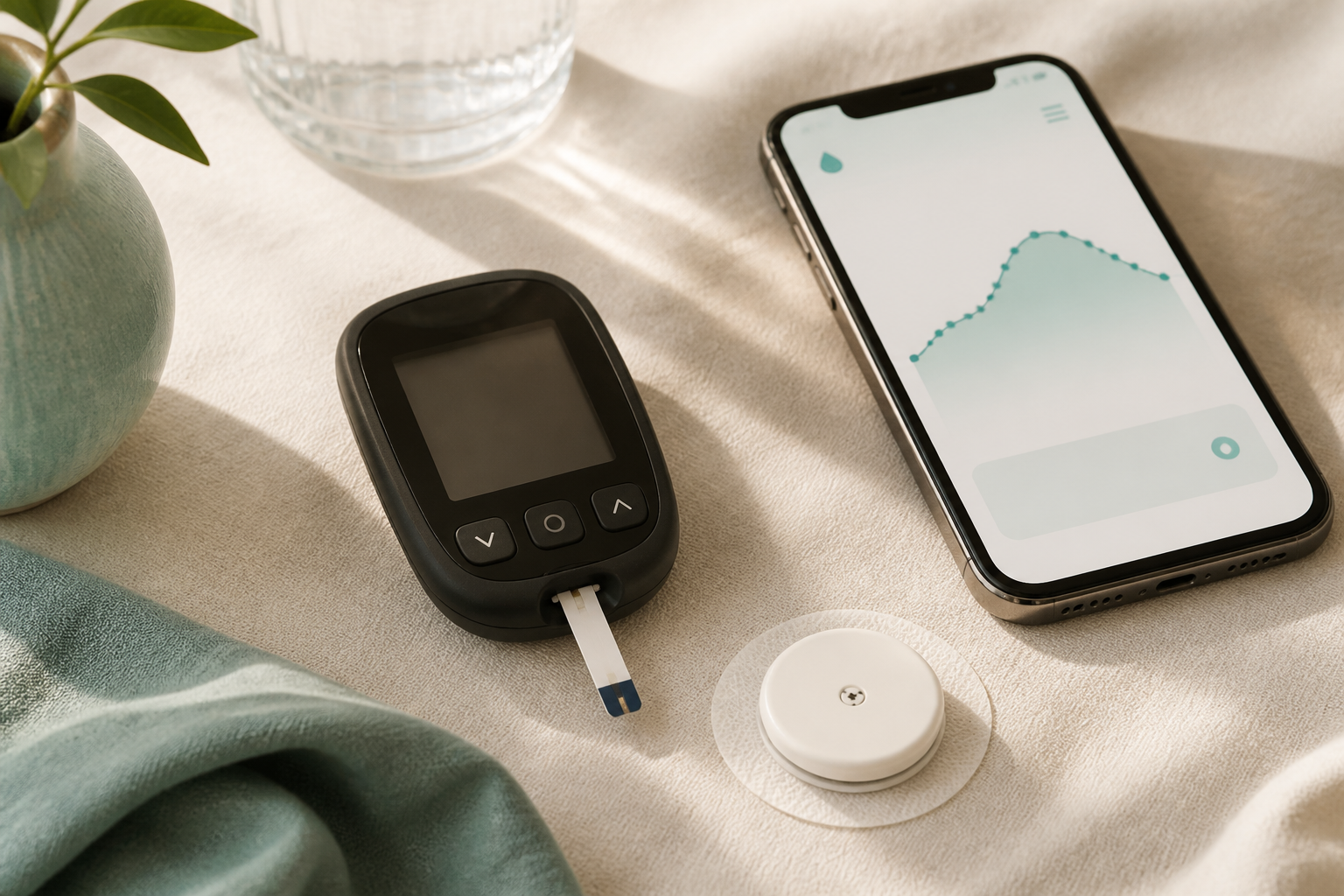
Continuous Glucose Monitors (CGMs) vs. Finger Pricks: Which Is Right for You?
Compare Continuous Glucose Monitors (CGMs) with traditional finger-prick meters to determine the best monitoring tool for your life.

The Evolution of Blood Glucose Monitoring
Monitoring blood glucose has evolved dramatically beyond traditional finger-prick tests. Continuous Glucose Monitors (CGMs) offer real-time insights into metabolic health.
Traditional Finger-Prick Meters (BGM)
- How it works: Measures glucose in capillary blood obtained from a tiny drop on your fingertip.
- Pros: Highly accurate, lower upfront cost, widely covered by insurance, compact.
- Cons: Captures only a single moment; requires multiple daily skin pricks.
Continuous Glucose Monitors (CGM)
- How it works: A small sensor placed under the skin measures interstitial fluid glucose every few minutes and sends data to a smartphone or reader.
- Pros: Displays continuous trend lines, offers customizable high/low alerts, eliminates daily finger pricks.
- Cons: Higher cost, potential sensor skin irritation, slight lag time between blood glucose and interstitial fluid readings during rapid shifts.
Choosing the Best Option for You
Common questions
Frequently asked questions
Are CGMs painful to apply?
Most users report minimal discomfort during insertion, similar to a minor pinch.
Do CGMs completely replace finger pricks?
Finger pricks may still be needed to verify readings if CGM sensor values do not match symptoms or during rapid glucose changes.
References
Sources
- ADA - Glucose Monitoring Technologies